CGC x JSA Signature Analysis: Martín Dihigo
Posted on 7/8/2025
By
James J. Spence, Jr.
Martín Magdaleno "El Maestro" Dihigo (Llanos) was born on May 25, 1906, in Matanzas, Cuba. During his baseball career as a player, he weighed 190 pounds at a height of 6'3", which made for a towering presence during his era. Dihigo's professional career saw him play numerous seasons in many leagues and countries, including Cuba (1923-27, 1930), Mexico (1940-44), Venezuela (1933), United States - Negro League (1929-31, 1935-36, 1945) and the Dominican Republic (1937).
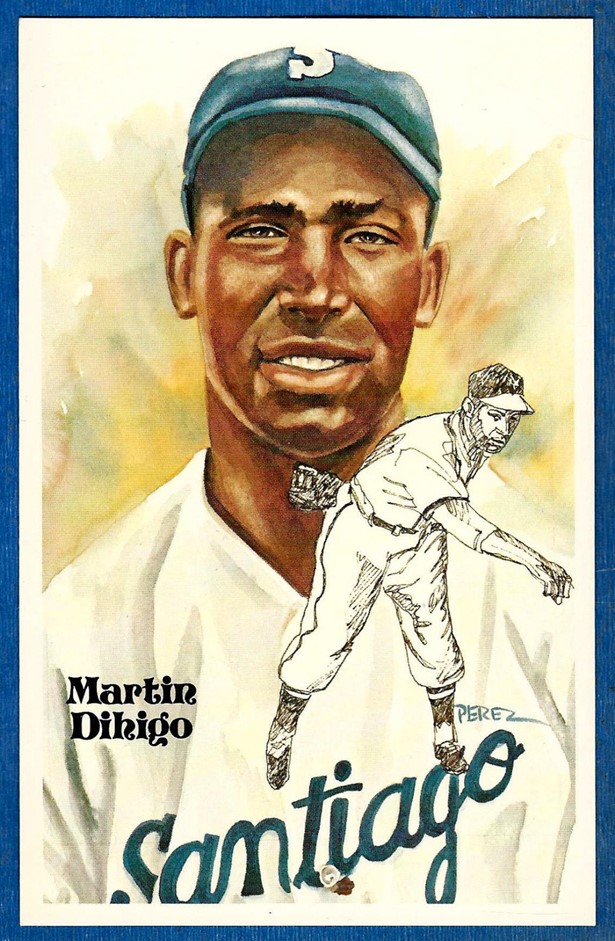 |
The versatile right-handed Dihigo played all nine positions on the field well, although he entered Cooperstown as a second baseman. He equally excelled as a pitcher (218 wins vs. 106 losses) and batted a career .319 at the plate. Dihigo is recognized by many historians as the greatest third baseman and outfielder in Negro League history.
In 1977, he was inducted into the National Baseball Hall of Fame as only the third ballplayer of Hispanic descent after Lefty Gomez (1972) and Roberto Clemente (1973). Dihigo also holds the distinction of being the only man inducted in the Cuban, Mexican and United States Hall of Fames.
Signature analysis
Dihigo’s right-handed signature was always legible, with each letter easily identified in precise, flowing cursive (Figure 1).
300 (propiedad-Veracrus)20250706225944085.jpg) |
|
| Figure 1 | |
In addition to signing his full first and last name, Dihigo's signature often also ended with the initials LL, which is an abbreviation for his mother’s maiden name Llanos (Figure 2).
301 (propriedad-Cruces)20250706220436562.jpg) |
|
| Figure 2 | |
Lifetime individual characteristics of his autograph included a slanted dash in place of a dot over the "i" (representing the Spanish accent mark that is part of his first name), a high upper loop in the "h" that is taller than the capital "D" and an odd, elevated connection between the "D" and "i" (Figure 3).
300 (HA-TX)_lg20250706221742158.jpg) |
|
| Figure 3 | |
Most surviving signatures in existence today were retrieved from team baseballs (Figure 4 & 5), typed and handwritten letters in Spanish, documents and books from his estate (Figure 6). I have seen few baseball-related examples in the hobby.
500 (Sikora-NC)_lg20250706224719410.jpg) |
20250706224634891.JPG) |
| Figure 4 and 5 | |
20250706225434635.JPG) |
|
| Figure 6 | |
Dihigo was family-oriented, well-read (he loved poetry), warm and humorous. When reading, he habitually underscored meaningful passages throughout his library. Letters to his son were filled with racial awareness and fatherly advice.
According to his grandson, Martín III, who resides in their ancestral cement row home, his grandfather suffered a debilitating stroke in 1965, which ended his radio career. This also inhibited his autographing habits, and his wife willingly assumed his signing duties. It was common for her to non-maliciously handwrite letters with content about her husband’s career and then sign his name. The final three years of Dihigo’s life were spent confined to an institutional nursing home where he could not even recognize visiting family members.
In 1999, a film crew documenting the life of Dihigo swarmed into his hometown and groveled for any artifact they could buy from the family. When their lucrative hope chest was depleted, the townspeople wanted to capitalize on this novel demand and began to "manufacture more." Even now, when American dealers and hobbyists navigate their way into the small destitute community, they are welcomed by an inexhaustible supply of signed, soiled antique books, documents and trinkets that are said to be the personal effects of the great Dihigo. Their family photo albums have long been pirated, with anything remaining deemed worthless.
Dihigo’s autograph is not an easy acquisition, and I would classify it as being rare (Figure 7). Although he was an obliging signer to autograph requests in person and by mail, American collectors had little interest in obtaining or recognizing his significance. And for the few that diligently pursued him; they had limited access due to a poor mail system, unpublished address and inability for visitation.
201 (HA-TX) (receipt) (1)_lg20250706231041182.jpg) |
|
| Figure 7 | |
He retired to his hometown of Cruces; near Cienfuegos, Cuba, where he served under Fidel Castro as the national Minister of Sports and hosted a popular radio show "Excelsior" in the nearby city of Santa Clara. His death from natural causes at the age of 66 on May 22, 1971, in Cienfuegos preceded his posthumous National Baseball Hall of Fame election by six years.
Although his countrymen have revered him as a national hero during his lifetime, his destitute community and the country of Cuba have failed to honor him with an appropriate burial site. In comparison, the elaborate shrine and museum of fallen revolutionist Ernesto "Che" Guevara that is just miles from the "grave" of Dihigo highlights this shameful oversight to the greatest athlete in Cuban history.
 (2)_lg20250706231801752.jpg) |
Stay Informed
Want news like this delivered to your inbox once a month? Subscribe to the free CGC eNewsletter today!