Counterfeit Card Alert: 2006 Panini World Cup Stickers #185 Lionel Messi
Posted on 6/11/2026
After a slight injury scare in a recent match that sparked global concern for the Argentina icon ahead of the 2026 FIFA World Cup in North America, Lionel Messi is expected to be fit for his country's opening game against Algeria on June 16. Although he has not officially confirmed or denied it, many are assuming this could be the Inter Miami superstar's last appearance in the World Cup. The 2026 tournament marks his sixth Argentina World Cup roster selection, as Messi already holds the tournament record for most matches played, appearing in 26 games across five prior tournaments.
As Messi and his teammates look to repeat as World Cup champions after their historic victory in 2022, collectors are once again gearing up to track down Panini's extremely popular World Cup stickers. A cornerstone of any World Cup soccer collection since 1970, the stickers have been released every four years in unison with the global tournament, with Panini also offering sticker books for collectors to fill and complete their sets.
 |
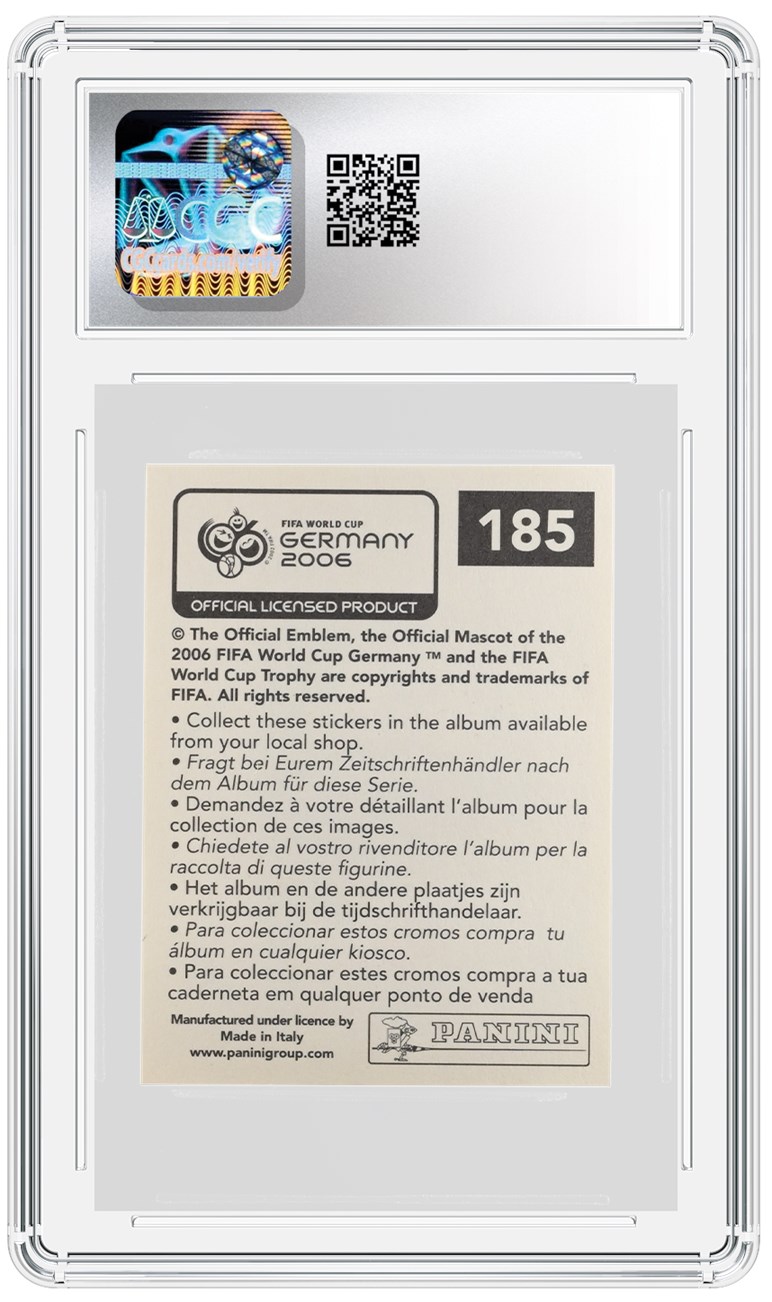 |
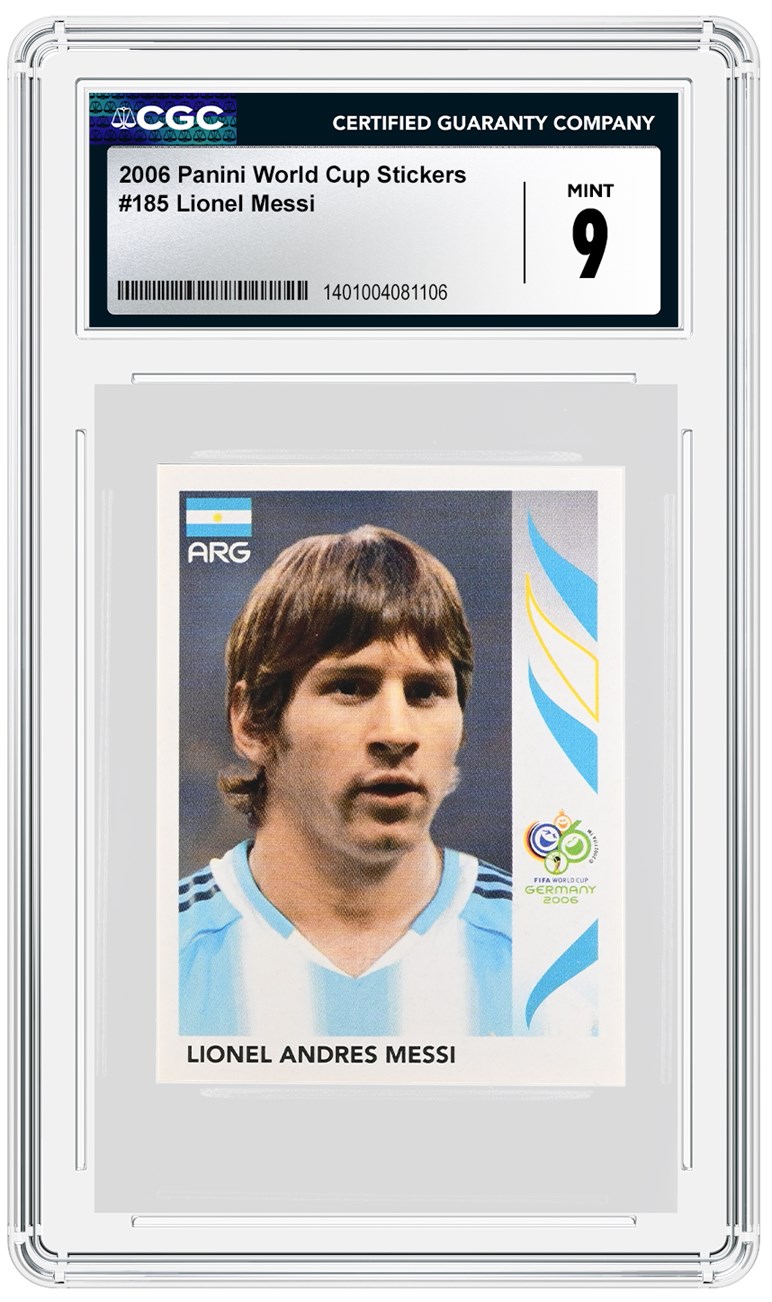
| An authentic 2006 Panini World Cup Stickers #185 Lionel Messi graded CGC 9 Click images to enlarge. |
|
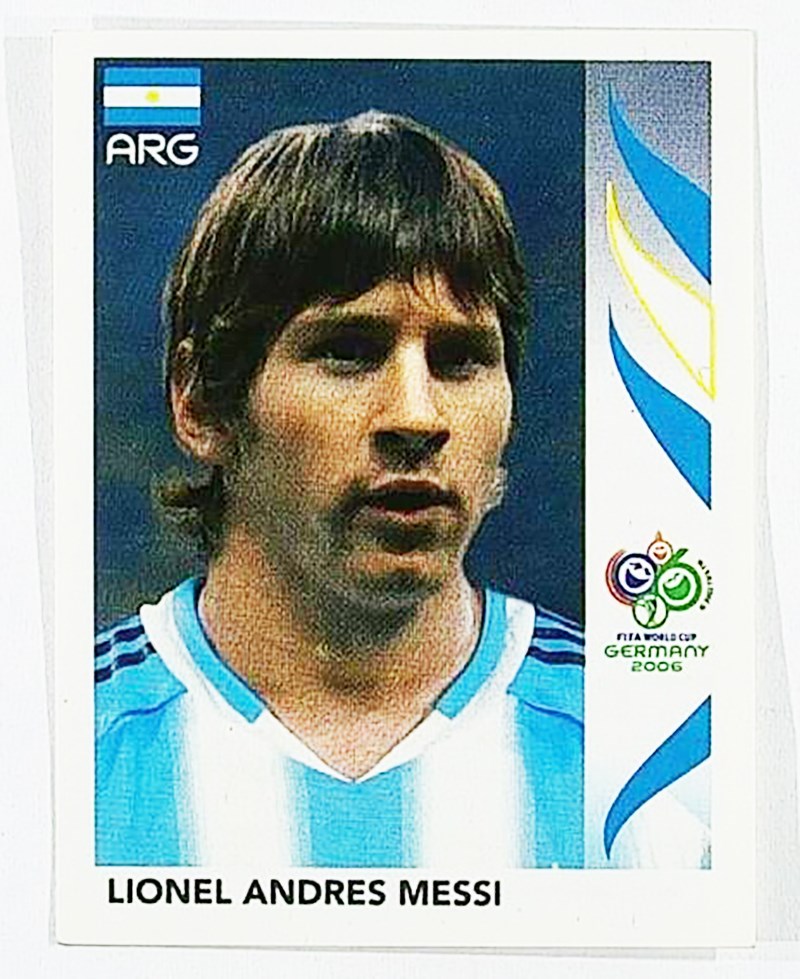
In 2006, Messi not only made his World Cup debut, but he also made his debut on Panini World Cup stickers. Today, the 2006 Panini World Cup Stickers #185, which features an 18-year-old Messi with long, shaggy hair, can command hundreds, if not thousands of dollars, in high grades. As with any popular collectible that has value, counterfeiters have targeted these expensive World Cup stickers, making fake versions like the one below.
 |
 |
| A counterfeit 2006 Panini World Cup Stickers #185 Lionel Messi Click images to enlarge. |
|
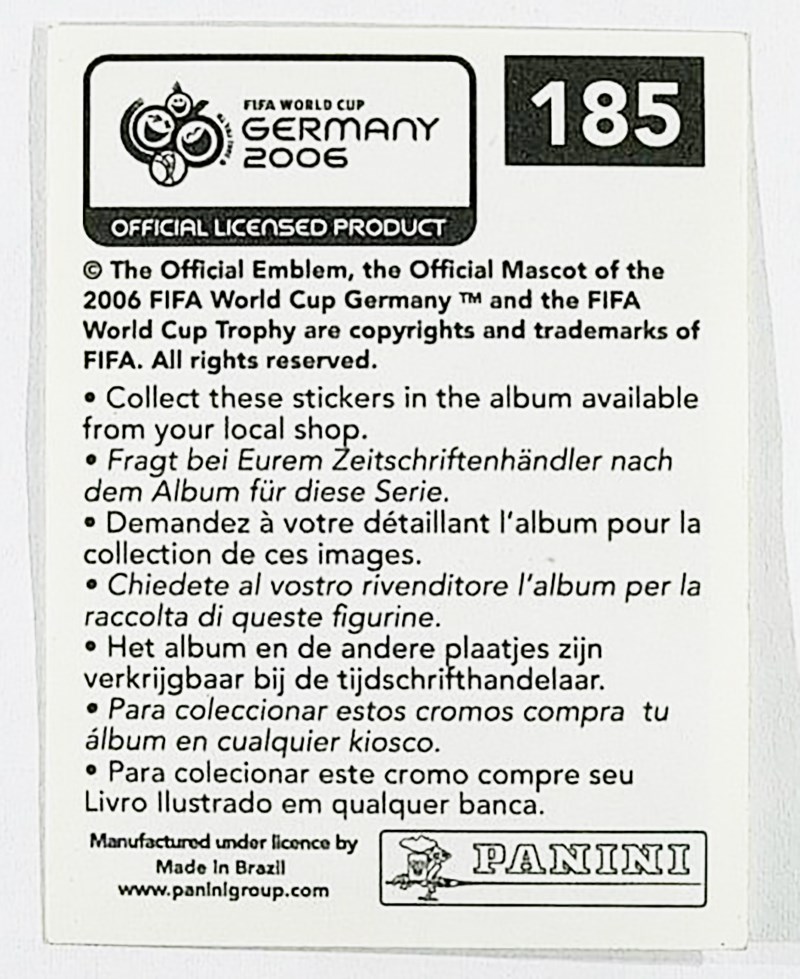
With the World Cup fast approaching, the CGC grading room has seen an uptick in submissions of these tricky soccer stickers. The graders remain, as always, on the lookout for counterfeits. This particular submission looks very similar to an authentic version at first glance. All the elements of the authentic sticker are in place and look valid, but a closer look reveals numerous inconsistencies.
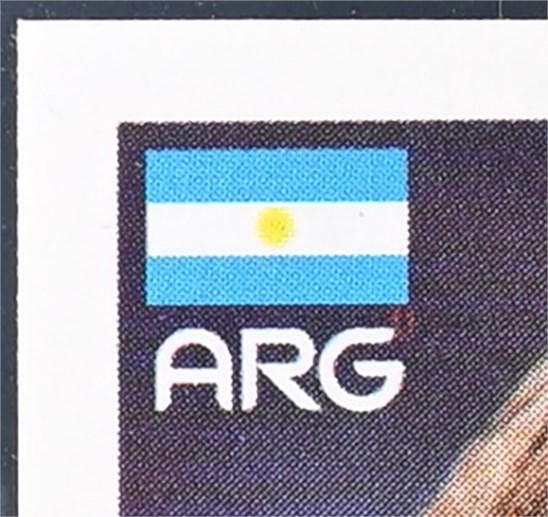
Starting with the front of the sticker, the colors are far darker and muted compared to an authentic copy. The counterfeit's background, Messi's face, his jersey, and more are all considerably darker in comparison. When zooming in, other issues are noticeable, as well. The top left of the sticker features a small Argentina flag and the country's abbreviation of "ARG." Not only is the coloring off, but the ink and print dots are clearly not as precise on the counterfeit. The authentic sticker has smoother lines and is less pixelated, on the edges of the flag, and around the "ARG" lettering.
 |
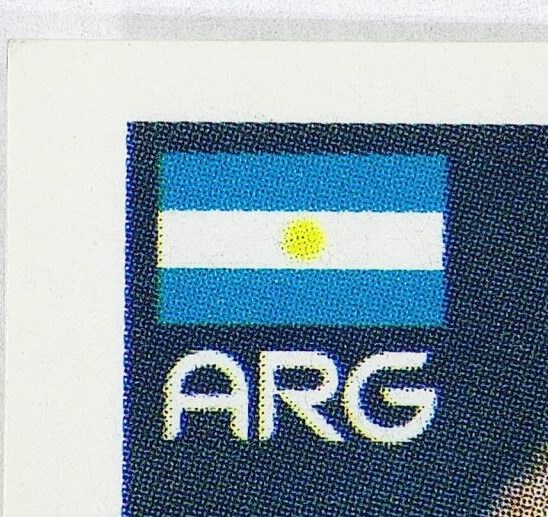 |
| LEFT: Close-up of the authentic RIGHT: Close-up of the counterfeit Click images to enlarge. |
|
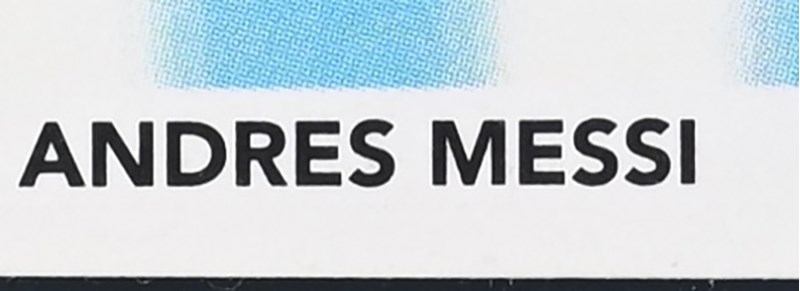
Similar issues can be found at the bottom of the sticker, where Messi's full name sits below his image. It is easy to tell the difference here by looking at the edges of the black letters on the white background. The authentic sticker's lettering is much cleaner, as you can visibly see print dots on the edges of the counterfeit because of the pixelation on the letters and throughout the front of the sticker.
 |
 |
| LEFT: Close-up of the authentic RIGHT: Close-up of the counterfeit Click images to enlarge. |
|
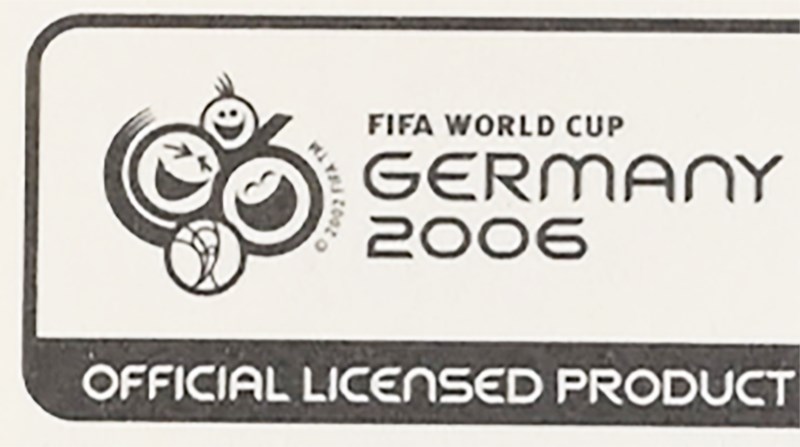
Turning our attention to the back of the sticker, we can see that the pixelation is just as obvious on each logo and all of the text. The backs of these stickers are simple, featuring black print on a white background along with the FIFA World Cup Germany 2006 logo and the Panini knight logo. Starting with the World Cup logo, the sloppy ink dots look so bad that it makes the border look like a perforated stamp.
 |
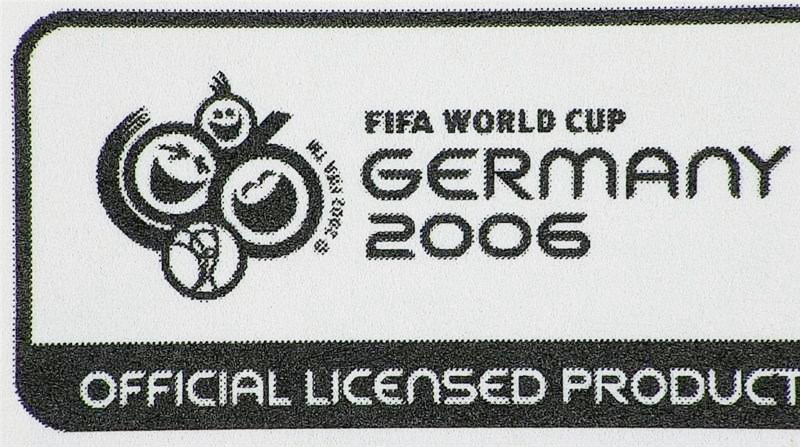 |
| LEFT: Close-up of the authentic RIGHT: Close-up of the counterfeit Click images to enlarge. |
|
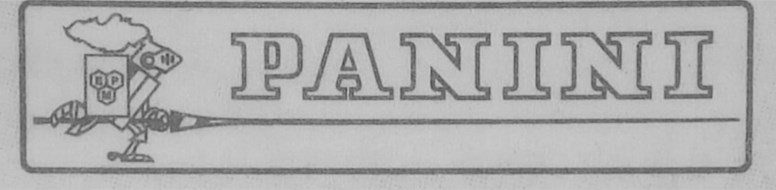
Finally, the pixelation issue can be seen on the Panini knight logo at the bottom of the back of the sticker. From the border to the lettering to the image of the knight, all the black ink is fuzzy around the edges. When zooming in, numerous inconsistences are seen throughout the counterfeit, with no uniformity. Print lines are diagonal across the top of the logo's border. Print dots run outside of the logo's border on the left and bottom edges and extreme pixelation is seen across the entire logo.
 |
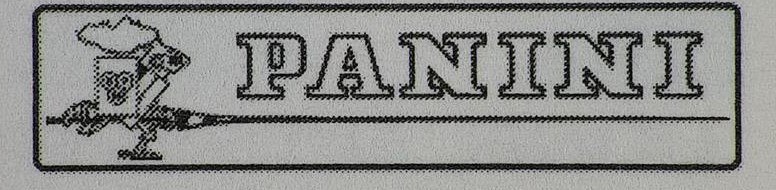 |
| LEFT: Close-up of the authentic RIGHT: Close-up of the counterfeit Click images to enlarge. |
|
All of these red flags on the front and back of the counterfeit 2006 Panini World Cup Stickers #185 Lionel Messi helped CGC experts determine that it is not an authentic example. Education is the most important tool when collecting cards, stickers, and other collectibles. The more collectors know about the printing and manufacturing process of cards, the fewer mistakes will be made when buying these collectibles. This case also highlights the importance of certification for any purported high-value example.
CGC authenticates, grades and encapsulates authentic examples of cards, making the hobby a safer place for collectors, traders, and sellers. To do this, CGC experts use world-class expertise, advanced technology, innovation, and operational excellence to provide sports card collectors and dealers with accurate and consistent certification services. CGC backs these determinations with the CGC Guarantee, which adds significant confidence, liquidity, and value to the hobby. To learn more about CGC's industry-leading services, visit CGCcards.com.
Related Links: